Understand · For everyone
Visiting a mosque
Whether you're a curious visitor, a student on a school trip, or a new Muslim gathering the courage for your first Jumu'ah: mosques are far more welcoming than their doors suggest, and this page removes every surprise.
Can I even go in?
Yes. Non-Muslims are welcome in nearly all mosques (the sanctuaries of Makkah and Madinah are the famous exception). Mosques run open days, host school visits, and imams generally light up when a visitor shows sincere interest. If in doubt, call or message ahead: "I'd love to visit and learn; when is a good time?" You'll usually be offered a personal tour.
What to wear and do
- Dress modestly: long trousers or skirt, covered shoulders. Women visiting will usually be offered or asked to wear a headscarf in the prayer hall; carrying a scarf shows lovely courtesy.
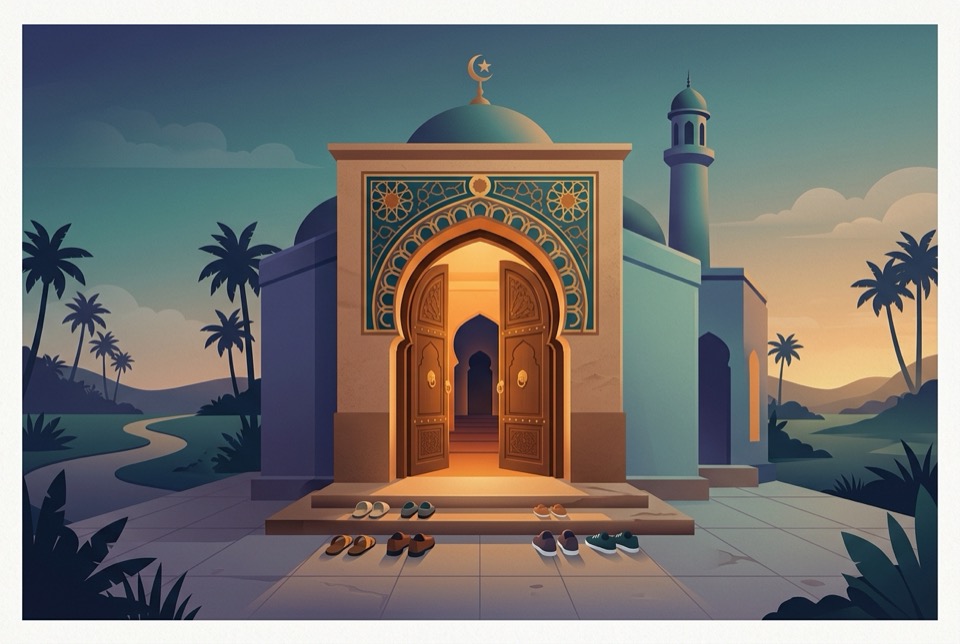
- Shoes come off before the prayer hall; racks are provided. Socks are fine.
- Phones on silent, walk quietly in front of anyone praying rather than directly across their prayer space if avoidable, and photography is fine in most mosques if you ask first.
- Nobody expects you to do anything. Visitors may sit at the back and watch prayers; you won't be pulled in or preached at. Greeting people with "as-salamu alaykum" delights everyone but is not required.
What you'll see
Less than you might expect, and that's the point: a large, carpeted, usually dome-ceilinged room with no statues, no images of people, no altar and no pews; Islam prays without furniture and without imagery of the divine. Look for the mihrab (the niche marking the direction of Makkah), the minbar (the steps the imam preaches from on Fridays), calligraphy of Quran verses, and lines in the carpet that organise the rows. The washing area near the entrance is for wudu, the ablution before prayer.
The Friday service (Jumu'ah)
The main weekly gathering, just after midday, replacing the Dhuhr prayer, and the whole thing takes 30-45 minutes:
- The adhan (call to prayer) is given.
- The imam delivers the khutbah: a sermon in two short parts, usually partly in English in Western mosques, while everyone sits and listens.
- Then a brief two-rakah congregational prayer, shoulder to shoulder in rows, and it's over; people greet each other and disperse fast (Friday is a workday in most of the world).
New Muslims: arrive with wudu already made, pray where everyone prays, copy what the rows do, and know two secrets: nobody is watching you as closely as you fear, and half the room once stood exactly where you're standing. Tell one person "I'm new"; you will leave with phone numbers.
Finding one
Use the mosque finder to see what's near you. Mosques vary in language, culture, and warmth; if the first one doesn't fit, try another, and look especially for ones advertising new Muslim classes or open days. The building is called a masjid, "place of prostration", and its whole architecture exists for one thing you now understand: the prayer.