Learn · Salah
How to Pray
Salah looks complicated from the outside. It isn't. It is a short, repeating cycle of movements and words that a child can learn, and this page contains every single one of them. Take it at your own pace; nobody prays perfectly on day one, and nobody is expected to.
First: Wudu
Before praying, Muslims wash in a specific, simple way called wudu (ablution). It takes about two minutes and doubles as a moment to arrive, slow down, and leave the day outside. The Prophet ﷺ said sins fall away with the water.
Make your intention
Intend in your heart that this washing is wudu for prayer. Intention lives in the heart; nothing needs to be said aloud. Then begin with "Bismillah" (In the name of Allah).
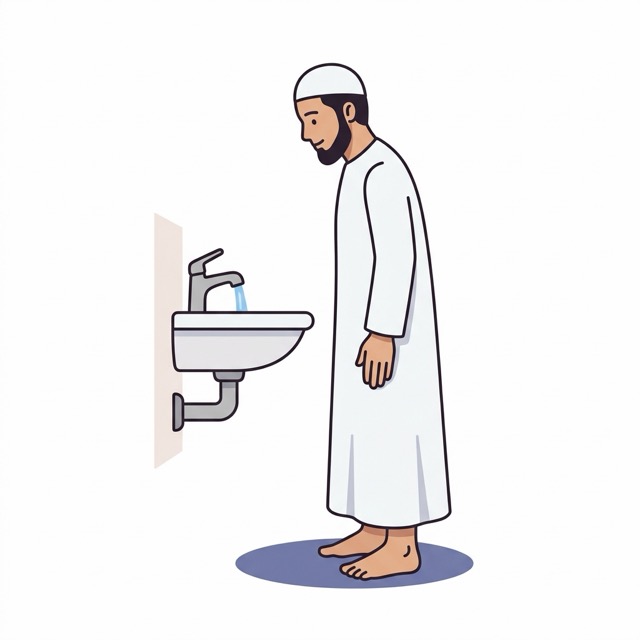
Wash your hands 3 times
Wash both hands up to the wrists, starting with the right.
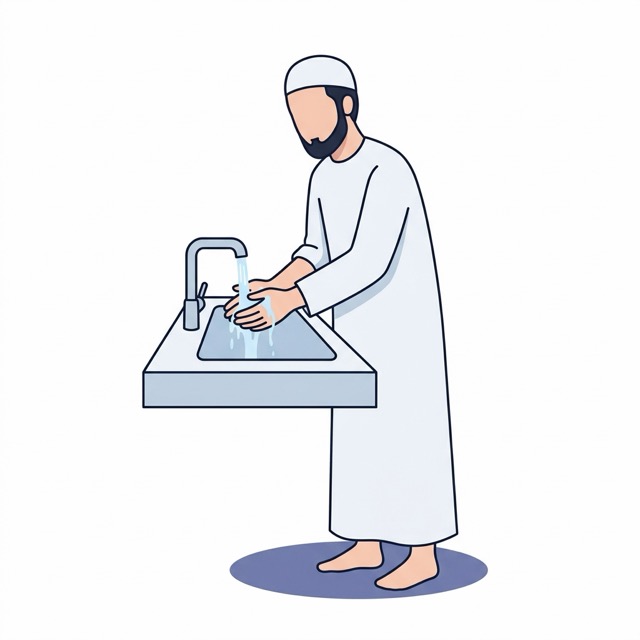
Rinse your mouth 3 times
Take water into your mouth, swirl it, and spit it out.
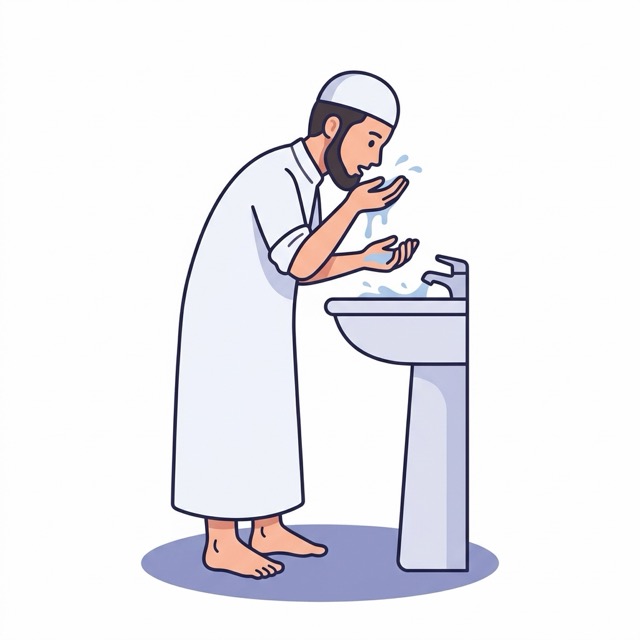
Rinse your nose 3 times
Sniff water gently into your nostrils and blow it out, using your left hand to clear it.
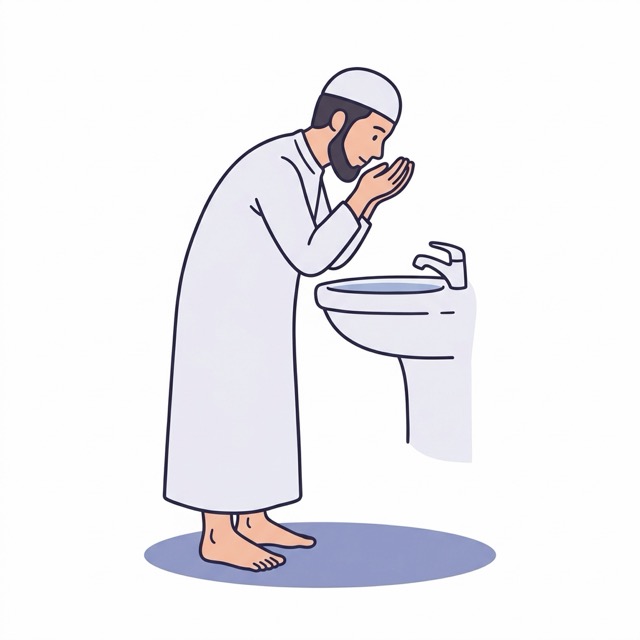
Wash your face 3 times
From hairline to chin and ear to ear.
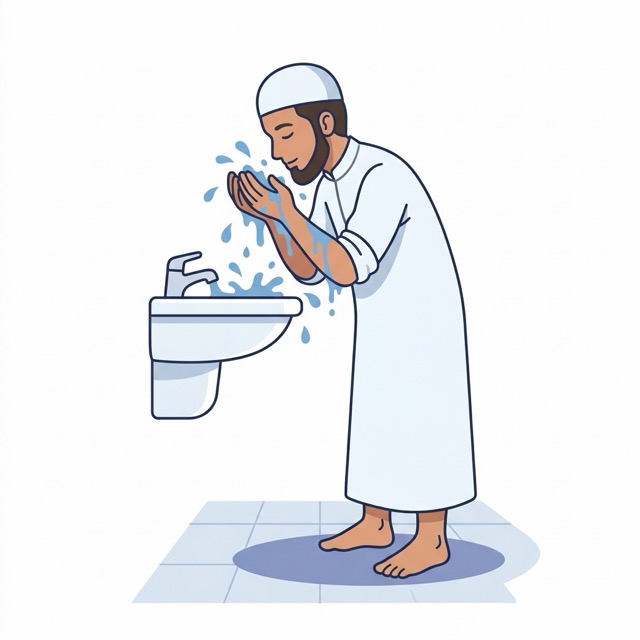
Wash your arms 3 times
From fingertips up to and including the elbows, right arm first.
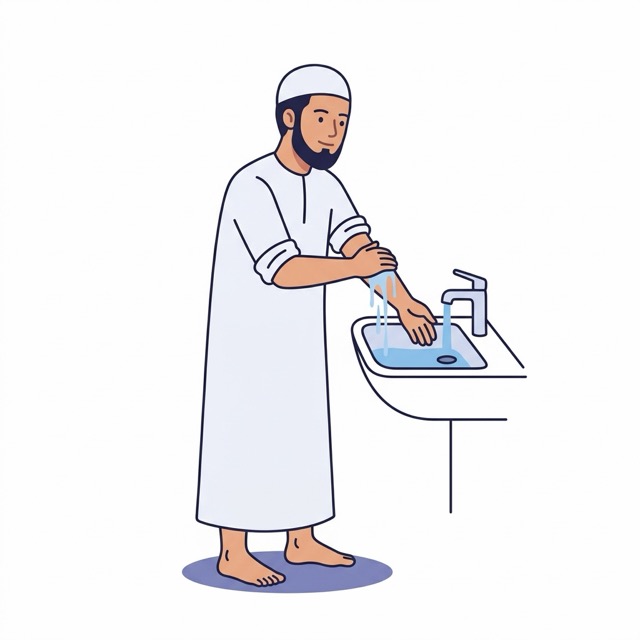
Wipe your head and ears once
With wet hands, wipe over your head from front to back, then wipe the inside and back of your ears with your index fingers and thumbs.
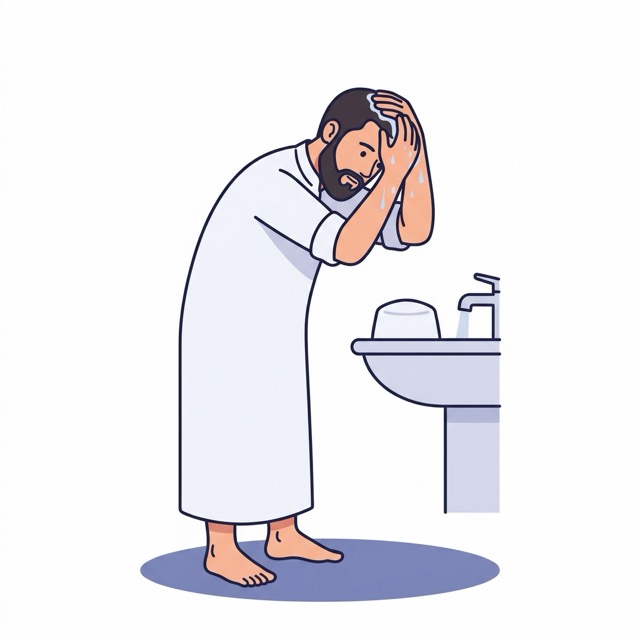
Wash your feet 3 times
Up to and including the ankles, right foot first, running water between the toes.
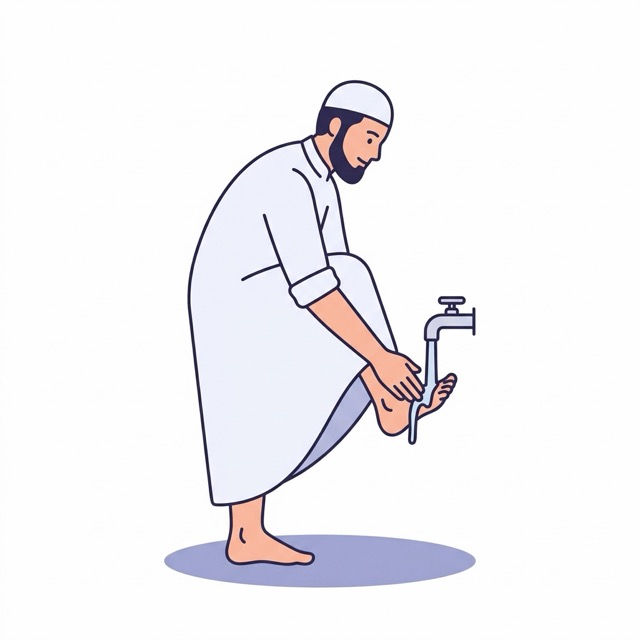
What breaks wudu
- Using the toilet, or passing wind
- Deep sleep (dozing while seated is generally fine)
- Losing consciousness
- Anything that flows from the private parts
Eating, sleeping lightly, talking, and touching your spouse in ordinary ways do not break it (the last point differs between schools; don't let it worry you as a beginner).
Do I need to redo wudu for every prayer?
No. Wudu lasts until something breaks it. If you prayed Dhuhr and nothing on the list has happened, you can pray Asr with the same wudu.
What if water is unavailable or I cannot use it?
Islam provides tayammum: a dry purification made by touching clean earth or stone and wiping the face and hands. Illness, lack of water, and genuine harm from water all make it valid.
What about a full shower (ghusl)?
After marital intimacy, and at the end of menstruation or postnatal bleeding, a full-body wash (ghusl) is needed before praying. An ordinary shower with the intention of purification, rinsing the mouth and nose, covers it.
I have a medical condition that breaks wudu constantly.
Islam accommodates this. Someone with, for example, incontinence makes wudu once per prayer time and prays; leakage after that is excused. Hardship is always lifted.
The basics
Each prayer is made of units called rakahs. One rakah is the cycle you'll learn below: standing, bowing, and two prostrations. The five daily prayers differ only in how many rakahs they contain and when they're prayed.
| Prayer | When | Rakahs |
|---|---|---|
| Fajr | Dawn, before sunrise | 2 |
| Dhuhr | Just after midday | 4 |
| Asr | Mid-afternoon | 4 |
| Maghrib | Just after sunset | 3 |
| Isha | Night | 4 |
Exact times depend on the sun where you are; the dashboard shows them for your location. You also need a clean spot to pray (a towel or any mat is fine) and to face the qibla.
One rakah, step by step
Steps marked core are the essential skeleton; the rest are recommended extras you can add as you grow. Read it through once, then pray along with it open in front of you. That is allowed, and it is exactly how most converts learn.
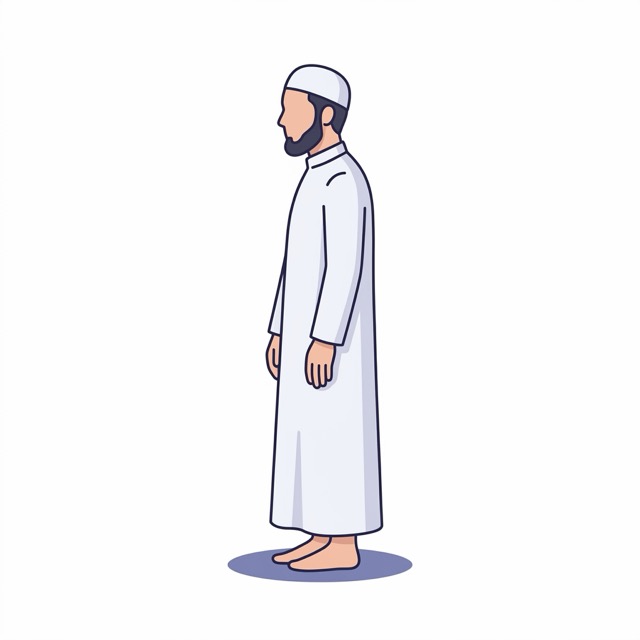
Stand and intend core
Stand facing the qibla (the direction of Makkah). Make the intention in your heart for which prayer you are praying. It does not need to be spoken.
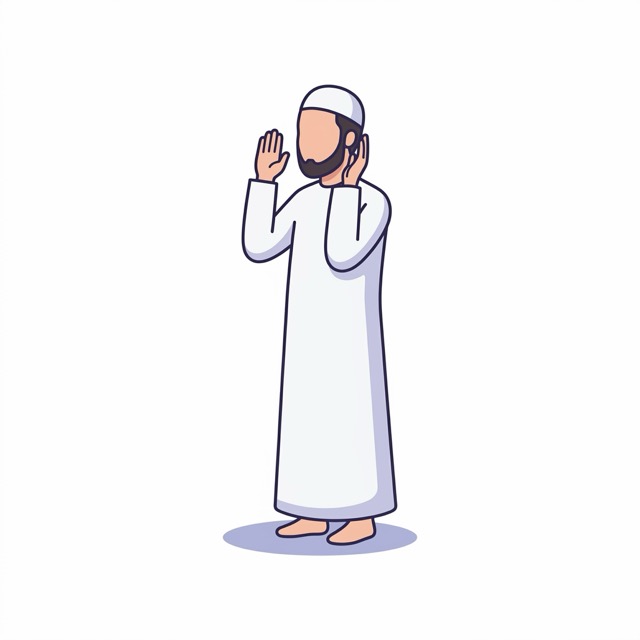
The opening takbir · Takbirat al-ihram core
Raise your hands to shoulder or ear level, palms forward, and say the takbir. The prayer has now begun.
اللهُ أَكْبَر
Allahu Akbar
Allah is the Greatest.
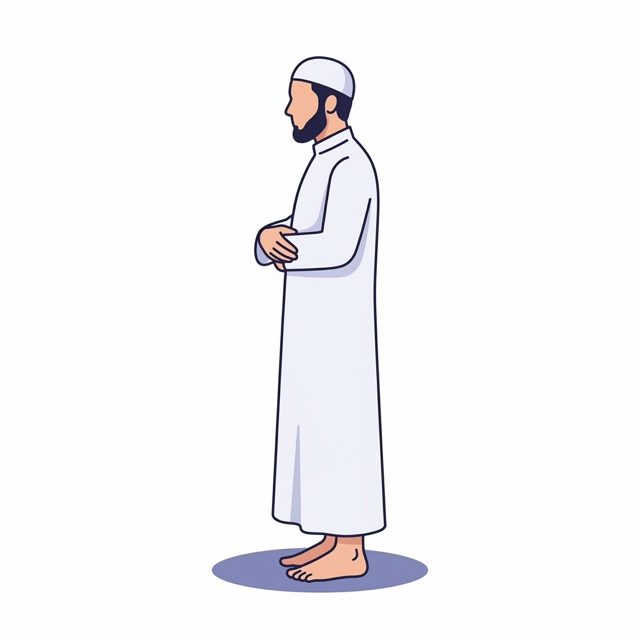
Place your hands and open
Place your right hand over your left on your chest or navel (schools differ; both are fine). Quietly recite the opening supplication if you know it; it is recommended, not required.
سُبْحَانَكَ اللَّهُمَّ وَبِحَمْدِكَ وَتَبَارَكَ اسْمُكَ وَتَعَالَى جَدُّكَ وَلَا إِلَهَ غَيْرُكَ
Subhanaka Allahumma wa bihamdika, wa tabaraka ismuka, wa ta'ala jadduka, wa la ilaha ghayruk
Glory be to You, O Allah, and praise. Blessed is Your name, exalted is Your majesty, and there is no god but You.
Recite Al-Fatiha · The Opening core
Recite Surah Al-Fatiha, the seven-verse opening chapter. It is recited in every single rakah of every prayer; it is the heart of salah.
Still learning it? See the beginner path below; your prayer still counts while you learn.
Recite a short surah
In the first two rakahs, follow Al-Fatiha with any other passage you know, for example Surah Al-Ikhlas. In the third and fourth rakahs, Al-Fatiha alone is enough.
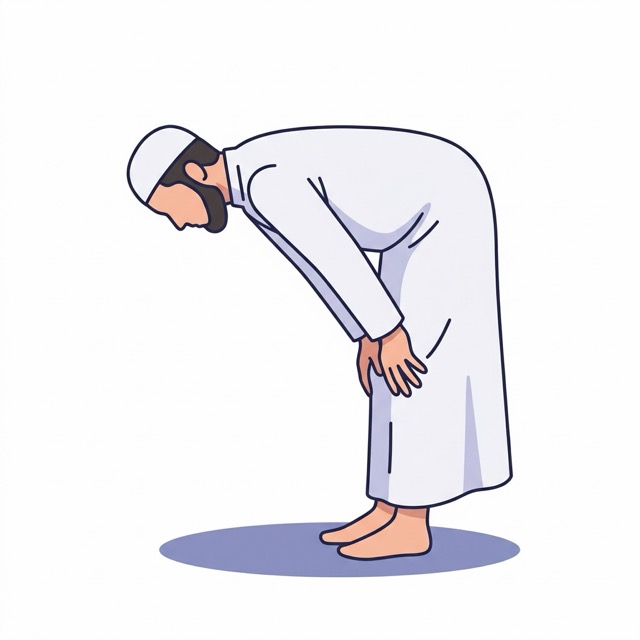
Bow · Ruku core
Say "Allahu Akbar" and bow with your back flat and hands gripping your knees. Say the phrase below three times.
سُبْحَانَ رَبِّيَ الْعَظِيم
Subhana Rabbiyal-Adheem
Glory be to my Lord, the Magnificent.
Rise from bowing core
Stand back up straight, saying the first phrase as you rise, then the second once standing.
سَمِعَ اللهُ لِمَنْ حَمِدَهُ · رَبَّنَا وَلَكَ الْحَمْد
Sami'Allahu liman hamidah · Rabbana wa lakal-hamd
Allah hears the one who praises Him · Our Lord, to You belongs all praise.
Prostrate · Sujud core
Say "Allahu Akbar" and go down: forehead and nose, both palms, both knees, and the toes of both feet on the ground. Say the phrase three times. This is the closest a servant is to their Lord; you may also add any du'a of your own here.
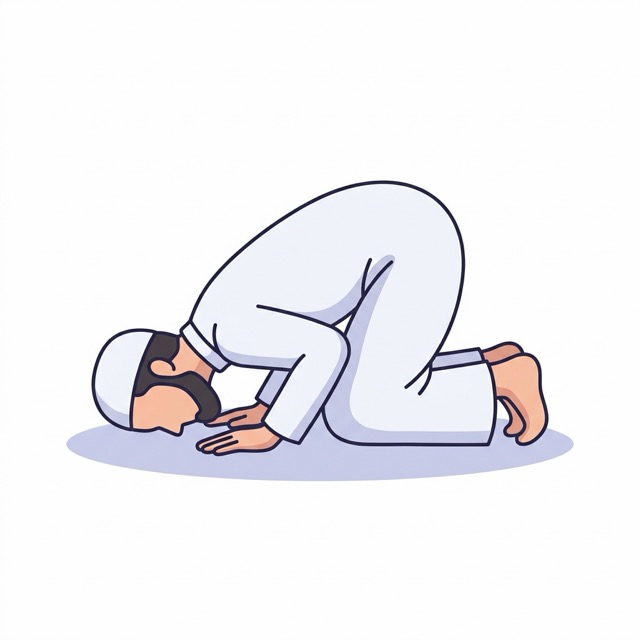
سُبْحَانَ رَبِّيَ الأَعْلَى
Subhana Rabbiyal-A'la
Glory be to my Lord, the Most High.
Sit briefly core
Say "Allahu Akbar" and sit up on your left leg, right foot upright. Ask for forgiveness before the second prostration.
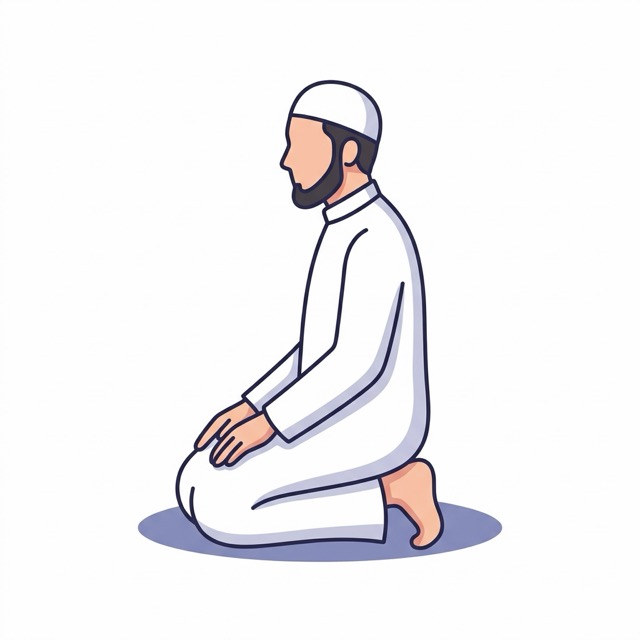
رَبِّ اغْفِرْ لِي
Rabbighfir li
My Lord, forgive me.
Prostrate a second time core
Exactly like the first prostration, with the same words. One full rakah (unit) is now complete.
Continue to the next rakah core
Say "Allahu Akbar" and stand for the next rakah, which repeats from Al-Fatiha (step 4). The number of rakahs depends on the prayer; see the table above.
The sitting (tashahhud) · Tashahhud core
After every second rakah, and in the final rakah, remain sitting after the second prostration and recite the tashahhud, raising your index finger at the declaration of faith.
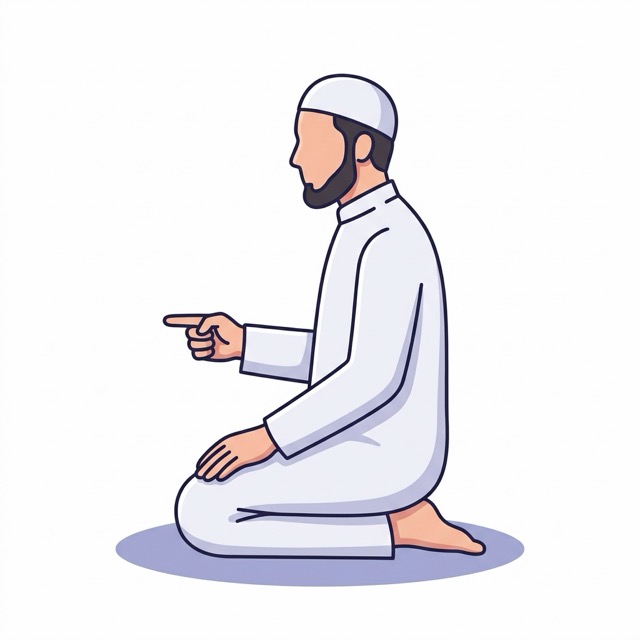
التَّحِيَّاتُ لِلَّهِ وَالصَّلَوَاتُ وَالطَّيِّبَاتُ، السَّلَامُ عَلَيْكَ أَيُّهَا النَّبِيُّ وَرَحْمَةُ اللهِ وَبَرَكَاتُهُ، السَّلَامُ عَلَيْنَا وَعَلَى عِبَادِ اللهِ الصَّالِحِينَ، أَشْهَدُ أَنْ لَا إِلَهَ إِلَّا اللهُ وَأَشْهَدُ أَنَّ مُحَمَّدًا عَبْدُهُ وَرَسُولُهُ
At-tahiyyatu lillahi was-salawatu wat-tayyibat. As-salamu alayka ayyuhan-nabiyyu wa rahmatullahi wa barakatuh. As-salamu alayna wa ala ibadillahis-salihin. Ash-hadu an la ilaha illallah, wa ash-hadu anna Muhammadan abduhu wa rasuluh
All greetings, prayers, and pure things are for Allah. Peace be upon you, O Prophet, and the mercy and blessings of Allah. Peace be upon us and upon the righteous servants of Allah. I bear witness that there is no god but Allah, and I bear witness that Muhammad is His servant and messenger.
Blessings on the Prophet ﷺ · As-Salat al-Ibrahimiyya
In the final sitting only, after the tashahhud, add the prayer upon the Prophet ﷺ, then any du'a you wish.
اللَّهُمَّ صَلِّ عَلَى مُحَمَّدٍ وَعَلَى آلِ مُحَمَّدٍ كَمَا صَلَّيْتَ عَلَى إِبْرَاهِيمَ وَعَلَى آلِ إِبْرَاهِيمَ إِنَّكَ حَمِيدٌ مَجِيدٌ، اللَّهُمَّ بَارِكْ عَلَى مُحَمَّدٍ وَعَلَى آلِ مُحَمَّدٍ كَمَا بَارَكْتَ عَلَى إِبْرَاهِيمَ وَعَلَى آلِ إِبْرَاهِيمَ إِنَّكَ حَمِيدٌ مَجِيدٌ
Allahumma salli ala Muhammadin wa ala ali Muhammad, kama sallayta ala Ibrahima wa ala ali Ibrahim, innaka Hamidun Majid. Allahumma barik ala Muhammadin wa ala ali Muhammad, kama barakta ala Ibrahima wa ala ali Ibrahim, innaka Hamidun Majid
O Allah, send prayers upon Muhammad and the family of Muhammad, as You sent prayers upon Ibrahim and the family of Ibrahim; You are Praiseworthy, Glorious. O Allah, bless Muhammad and the family of Muhammad as You blessed Ibrahim and the family of Ibrahim; You are Praiseworthy, Glorious.
Close with salam · Tasleem core
Turn your face to the right and say the salam, then to the left and repeat it. The prayer is complete.
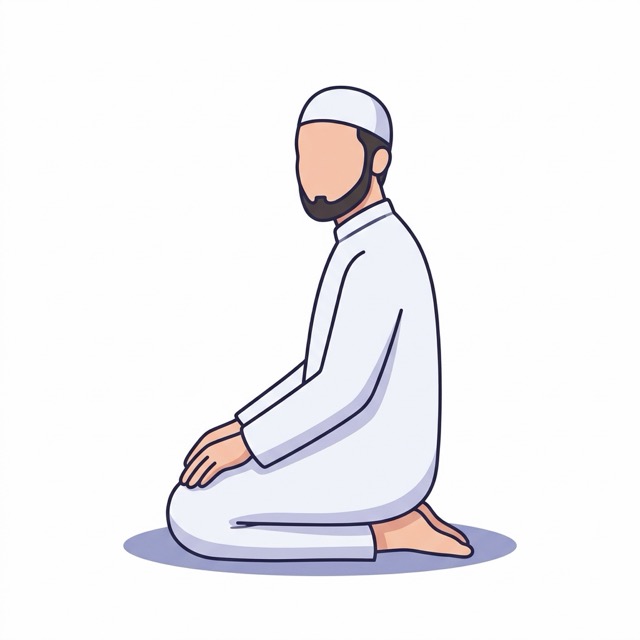
السَّلَامُ عَلَيْكُمْ وَرَحْمَةُ الله
As-salamu alaykum wa rahmatullah
Peace be upon you, and the mercy of Allah.
The beginner path: pray today, not someday
If all of the above feels overwhelming, here is the honest minimum. It is a real, valid way to begin, taught by the Prophet ﷺ himself to companions who were still learning:
- Make wudu and stand facing the qibla.
- Say "Allahu Akbar" and begin.
- Where recitation goes, say: "SubhanAllah, alhamdulillah, la ilaha illallah, Allahu Akbar" (Glory to Allah, praise to Allah, there is no god but Allah, Allah is Greatest).
- Bow, prostrate twice, and repeat the phrases above in each position.
- Sit at the end, say the parts of the tashahhud you know (even just the shahada), and finish with salam to the right and left.
Then, week by week, replace the placeholders: learn Al-Fatiha with the memorisation tool, then the tashahhud with the du'a cards. The 30-day journey paces all of this for you.
Questions everyone asks
I don't know Al-Fatiha yet. Can I still pray?
Yes, and you must not wait until you've memorised it. The Prophet ﷺ taught a struggling companion to say "SubhanAllah, alhamdulillah, la ilaha illallah, Allahu Akbar" in place of recitation while learning. Pray now, learn as you go; Allah sees the learning itself as worship.
What if I make a mistake or forget a step?
Your prayer is not ruined. For forgetfulness there is even a built-in remedy: two extra prostrations at the end (sujud as-sahw). A sincere, imperfect prayer is worth infinitely more than a perfect prayer never prayed.
What do I wear?
Clean clothes covering the body: for men at minimum from navel to knees (a shirt too, in practice), and for women everything except face and hands. Nothing special is required; the clothes you own are fine.
Do I have to pray in Arabic?
The fixed phrases and Al-Fatiha, yes; they are short and this guide gives you every one. Your personal du'a in sujud and after the prayer can be in any language. Allah understands them all.
What if I miss a prayer?
Pray it as soon as you remember (this is called qada). No spiral of guilt: the door is always open, and the very act of making it up is beloved to Allah.
Can I pray sitting down?
Yes. Illness, injury, and inability all excuse standing: pray sitting, and if that is not possible, lying down with gestures. "Allah does not burden a soul beyond what it can bear." (Quran 2:286)