The fifth pillar
Hajj and Umrah, explained
Once in a lifetime, if you are physically and financially able, you owe God a journey. Most Muslims wait years for it and weep when it arrives. Here is how the pilgrimage actually works: the rites, the days, the costs, and the questions converts specifically ask.
Two pilgrimages, one place
Umrah, the "lesser pilgrimage", can be performed any time of year and takes a few hours: it is the ihram, the tawaf, the sa'i, and the trim (all explained below). It is beloved, recommended, and not obligatory. Hajj is the obligation: five to six fixed days in the month of Dhul Hijjah, containing everything in Umrah plus the great gathering at Arafah and the rites around Mina. Most pilgrims combine both in one trip.
The rites, in plain English
- Ihram: before the boundary of the sacred zone, you wash, make the intention, and dress in the pilgrim's state: men in two plain white unstitched cloths, women in ordinary modest dress. From that moment: no perfume, no cutting hair or nails, no arguing, no intimacy, no harming so much as an insect. Every king and cleaner now looks identical; that is the point.
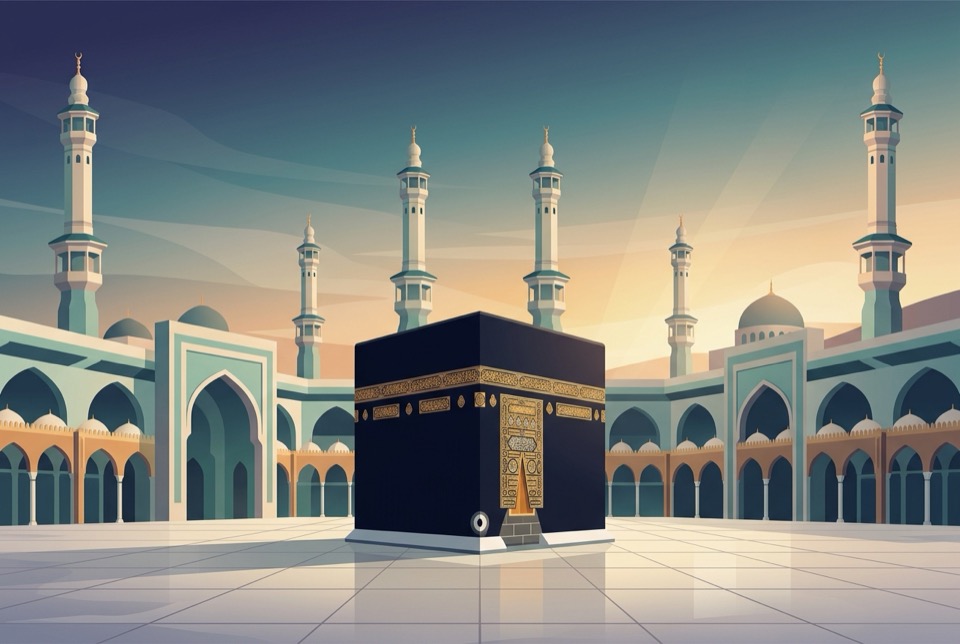
- Tawaf: seven anticlockwise circuits of the Kaaba, the house Abraham raised, praying as you go. The building isn't worshipped; it's the shared compass point made visible, and circling it puts you physically inside the fact that God is the centre and you are the orbit.
- Sa'i: seven lengths between the hills of Safa and Marwa, re-walking Hagar's desperate search for water for her baby. The mother's ordeal became a rite for all humanity: Islam built the memory of a woman's faith into its greatest journey.
- Arafah (9 Dhul Hijjah): the day that IS Hajj, as the Prophet ﷺ said. Millions stand on one plain from noon to sunset doing nothing but asking forgiveness. It is judgement day rehearsed, and the tradition holds no day sees more people freed from the Fire.
- Muzdalifah and Mina: a night under the open sky, then the days of stoning the pillars: pebbles thrown at the stations where Iblis tried to talk Abraham out of obedience. You are physically rejecting the whisperer.
- The sacrifice and the shave: Eid al-Adha arrives mid-Hajj; a sacrifice is arranged (a voucher, these days), and men shave or crop their hair, women trim a fingertip's length. Then a final tawaf, and it is done: the hadith promises the accepted Hajj leaves you "as the day your mother bore you".
The practicalities nobody puts in brochures
- Booking: Hajj runs on national quotas and licensed operators; you apply through official channels (in Saudi Arabia's current system, the Nusuk platform) or accredited group packages. Book nothing outside official routes; Hajj fraud preys on the eager.
- Cost: realistically several thousand pounds/dollars from the West for Hajj; Umrah can be a fraction of that. Saving toward it with intention is itself rewarded worship, and the obligation only binds when you can genuinely afford it debt-free with your family provided for.
- Fitness: expect miles of walking in heat and crowds. Go as young and fit as you can rather than defaulting to retirement age; the rites have concessions (wheelchairs, deputised stoning) but stamina is the best companion.
- The reality shock: it is crowded, hot, unglamorous, and logistically imperfect, and pilgrims overwhelmingly report the same paradox: the discomfort dissolves into the most significant days of their lives. Go for God, not for comfort, and the trip cannot fail.
Convert questions
- "Do I need to prove I'm Muslim?" Yes: visas for the holy cities require evidence, usually a shahada certificate or a letter from a mosque or Islamic centre. If you took your shahada privately, any imam who knows you will issue one after a short conversation; sort this months ahead, and it's one practical reason a mosque shahada is worth doing at some point.
- "Can I go alone as a woman?" Rules have moved: current Saudi regulations permit women to perform Hajj and Umrah without a male guardian, typically with a group. Check the rules at booking time; they've changed more than once.
- "How soon after converting?" Whenever ability and readiness coincide; there is no waiting period. Plenty of converts make Umrah in their first year and describe standing before the Kaaba, a thing they'd only faced in prayer, as the moment the whole thing became unarguably real.
Until the invitation comes: the first ten days of Dhul Hijjah are a yearly share of the season for everyone (fast Arafah; it expiates two years), and the story the whole pilgrimage re-enacts, Abraham, Hagar, and Ishmael, is told in the prophets' stories. "And proclaim the pilgrimage to the people; they will come to you on foot and on every lean camel, from every distant pass" (22:27). Four and a half millennia later, they still do.